|
Welcome to the August edition of EMAP eNews. August is National Emergency Management Awareness Month, and September is National Preparedness Month. In this issue, we look at how awareness and preparedness work together and share the latest news, resources, and updates from EMAP.
Use the navigation bar below to jump between different sections easily: |
|
|---|
|
Awareness Is the Spark; Preparedness Is the Practice
|
|
|---|
|
In emergency management, awareness usually starts with something that gets our attention. It might be a headline, an exercise, a proclamation, a recent disaster, or even a conversation that reminds us that risk is always changing. Those moments matter. They help us pause and ask: What could happen here? Who could be affected? What can we do now to reduce harm later? But awareness by itself is only the beginning. Preparedness is what we do with that awareness.
That is the part I think we sometimes have to remind ourselves about. Preparedness is not something we dust off when the forecast looks bad or when a disaster is already unfolding. It is the steady work that happens all year long: updating plans, practicing with partners, checking assumptions, documenting lessons learned, and making small improvements before they become urgent needs.
This is why EMAP accreditation is so valuable. At its best, accreditation is not just a milestone or a certificate on the wall. It gives emergency management programs a clear, nationally recognized standard to measure themselves against. It helps us look across the full program — planning, hazard analysis, mitigation, continuity, resource management, communications, training, exercises, corrective action, public education, and more — and ask honest questions about where we are strong and where we still have work to do.
Accreditation also brings leadership into the conversation in a meaningful way. Preparedness cannot live only in binders, software systems, or the emergency management office. It needs visible support, resources, follow-through, and accountability. When leaders treat accreditation as an ongoing management tool, it becomes easier to align priorities, track progress, make decisions, and keep preparedness from becoming something we only think about after something goes wrong.
I also appreciate the way accreditation keeps continuous improvement front and center. Preparedness is never really finished. Communities change. Staff members move on. New hazards emerge. Exercises reveal gaps. Real incidents teach hard lessons. A strong program has to capture those lessons and turn them into action — not someday, but as part of the regular rhythm of the organization.
Awareness may be the spark, but preparedness is the practice. EMAP accreditation helps turn that practice into something intentional, measurable, and sustainable. Long before a disaster happens, it helps organizations ask better questions, build better habits, and strengthen the partnerships they will depend on when it matters most. That is the real value of readiness year-round: doing the work before the emergency, so our communities are better supported when the emergency comes.
Thank you,
Jody Ferguson
EMAP Commission Chair
|
|
|---|
|
Did you know August is National Emergency Management Awareness Month? |
|
|---|
|
August marks National Emergency Management Awareness Month, a time to recognize the emergency management profession and the year-round work that prepares organizations and communities for emergencies.
Much of that work happens before an incident occurs. Emergency managers develop plans, coordinate with partners, conduct training and exercises, address continuity needs, and evaluate their programs to identify areas for improvement.
EMAP accreditation gives programs a framework for examining these areas as a whole. The process helps organizations establish a baseline, identify strengths and resource gaps, and determine where additional attention is needed.
One EMAP professional shared how their accreditation work helped their jurisdiction develop comprehensive continuity of government and continuity of operations plans. The process also helped support teams better understand the jurisdiction's essential needs and focus their efforts accordingly.
Examples like this demonstrate the behind-the-scenes work of emergency management. Effective programs must understand their capabilities, recognize gaps, and adapt as personnel, resources, risks, and community needs change.
National Emergency Management Awareness Month provides an opportunity to recognize the scope of the profession and the work required to maintain an effective emergency management program. EMAP accreditation provides a structured way for organizations to evaluate that work and continue strengthening their programs over time.
|
|
|---|
|
EMAP Reaccredited by ANSI Under Revised Standards Development Procedures
|
|
|---|
|
We are excited to announce that, effective August 5, 2026, the American National Standards Institute (ANSI) Executive Standards Council (ExSC) approved EMAP's reaccreditation under its recently revised standards development operating procedures for documenting consensus on EMAP-sponsored American National Standards.
This reaccreditation affirms that EMAP's standards development process continues to meet ANSI's rigorous requirements. It reflects EMAP's ongoing commitment to transparency, openness, balance, due process, and consensus in developing and maintaining the Emergency Management Standard and the Urban Search & Rescue Standard.
The reaccreditation also reflects EMAP's adoption of updated Policies & Procedures for the Development of an American National Standard, which document the procedures used to establish consensus for EMAP-sponsored American National Standards. The current policies and procedures are available on the EMAP website.
This achievement reinforces the credibility and integrity of the EMAP Standards and ensures accredited programs continue to be evaluated against nationally recognized consensus standards developed through a robust, inclusive process.
|
|
|---|
|
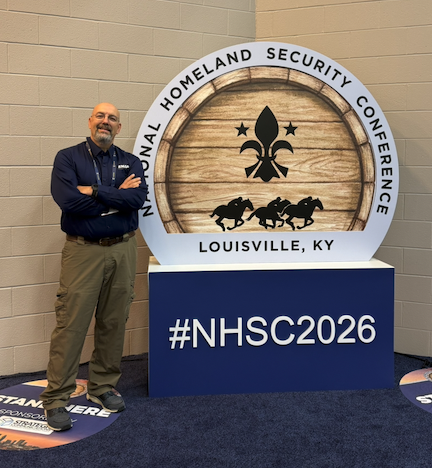
Earlier this month, Todd Livingston, EMAP Training Coordinator, spoke at the 2026 National Homeland Security Conference in Louisville, Kentucky. During his session, “Integrating Fusion Centers Across the Emergency Management Enterprise: From Intelligence to Operations,” Todd shared insights on incorporating intelligence into emergency management planning and operations, highlighting the value of collaboration and shared knowledge in strengthening emergency management programs. Thank you to the emergency management and homeland security professionals who were able to join us for this presentation! |
|
|
|
|
Have you created your new travel profile with ALTOUR? |
|
|---|
|
If you have not yet created your new ALTOUR travel profile, please do so before requesting any new EMAP business travel reservations. ALTOUR transitioned to a new Global Distribution System (GDS) on August 1, 2026, and travel agents cannot book new travel until a traveler profile has been established in the upgraded system.
Creating your profile only takes a few steps and will ensure you are ready to book future business travel without delays. The 2026 Business Travel Guide, located here, provides step-by-step instructions for:
- Registering your account.
- Completing required traveler information.
- Adding frequent traveler and loyalty program numbers.
- Accessing and updating your profile in the future.
For questions regarding EMAP travel policies or the transition, please contact us at emap@emap.org. For assistance creating your profile or travel reservations, contact Sherry Smith, our ALTOUR travel advisor, at sherry.smith@altour.com or 859-313-5373.
|
|
|---|
|
Help EMAP Build Upcoming Assessment Teams |
|
|---|
|
EMAP is planning upcoming assessments and is currently seeking Assessors to support assessment teams and document reviews. We are updating availability from our current Assessors to help match the right experience and availability with upcoming needs.
If you are an EMAP Assessor, please take a moment to complete the Assessor Availability Form. We encourage you to respond even if your availability is limited, as needs may vary based on the type and timing of each assessment.
Our current needs include:
- November 30-December 4, 2026
- Ch. 3
- 4.1, 4.2 & 4.3
- 4.4
- 4.5
- 4.6, 4.10 & 4.11
- 4.8 & 4.12
- December 7-11, 2026
- 4.4
- 4.5
- 4.7 & 4.9
- 4.8 & 4.12
- Virtual December 14-18, 2026
- Ch. 3
- 4.1, 4.2 & 4.3
- 4.4
- 4.5
- 4.6, 4.10 & 4.11
- 4.8 & 4.12
Please use this link to submit your availability information.
Your response helps EMAP plan ahead and ensure qualified Assessors are available when programs need them. Thank you for supporting EMAP and the accreditation process. Contact us with any questions at emap@emap.org.
|
|
|---|
|
As National Emergency Management Awareness Month comes to a close and National Preparedness Month begins, we asked EMAP staff to share their perspectives on preparedness, continuous improvement, and the role accreditation can play in strengthening emergency management programs. |
|
|---|
|
What does preparedness mean to you?
To me, preparedness means having confidence that an organization can effectively respond to, recover from, and adapt to an emergency because it has invested in planning, coordination, training, exercises, and continuous improvement long before an incident occurs. Preparedness is not a destination or a single document; it is an ongoing commitment to evaluating capabilities, learning from experience, and making meaningful improvements over time. |
|
|---|
|
What role do EMAP Standards play in helping organizations prepare before disasters occur?
The EMAP Standards provide a roadmap for building and sustaining effective emergency management programs. They encourage organizations to identify risks, develop and maintain plans, establish partnerships, conduct training and exercises, evaluate performance, and implement corrective actions. By integrating these activities into day-to-day operations, organizations strengthen their ability to respond effectively when emergencies occur rather than trying to build capabilities during a crisis. |
|
|---|
|
How does EMAP accreditation strengthen preparedness?
EMAP accreditation provides organizations with a nationally recognized framework for evaluating and strengthening every aspect of their emergency management program. The standards encourage programs to move beyond simply meeting requirements by establishing sustainable processes, maintaining current documentation, fostering partnerships, and implementing continuous improvement. As organizations work through the accreditation process, they often find opportunities to improve overall preparedness, not just assessment readiness. |
|
|---|
|
What is one misconception people have about preparedness?
One common misconception is that preparedness is achieved once plans are written or an accreditation is awarded. In reality, preparedness is never finished. Organizations, hazards, technologies, and communities continually evolve, and emergency management programs must evolve with them. True preparedness requires ongoing evaluation, maintenance, and continuous improvement to ensure capabilities remain current and effective. |
|
|---|
|
What is one message you'd like readers to take away about the connection between accreditation and preparedness?
Accreditation is not the end goal; it is a tool for building a stronger emergency management program. The EMAP Standards' greatest value is helping organizations build a culture of continuous improvement that strengthens preparedness every day. Preparedness isn't created during a disaster. It's built long before an incident through deliberate planning, continuous improvement, and sustaining capabilities.
|
|
|---|
|
Avoiding the Fog: Keeping Your Emergency Management Program on Mission |
|
|---|
|
Emergency management professionals understand the concept of the “fog of war.” During an incident, information is incomplete, conditions change rapidly, resources are limited, and decisions must often be made before the entire situation is understood.
But emergency management programs can experience another kind of fog long before a disaster occurs.
It develops gradually through the day-to-day demands of managing a Program. Meetings fill the calendar. Grant deadlines approach. Budgets require attention. Vacancies create additional workloads. Special projects emerge. Elected and appointed officials have requests. Community events require support. Plans need updates. Training opportunities arrive. Reports are due. Routine incidents occur. And somewhere in the middle of all of it are the inevitable “other duties as assigned.”Every one of these activities may be legitimate and necessary. Collectively, however, they can create an administrative fog that makes it difficult to see the larger mission.
A program can become extremely busy without necessarily becoming more prepared. That creates an important leadership question for every emergency management program:
Are we accomplishing the mission, or are we simply accomplishing tasks?
Mission Before Activity
Military organizations place significant emphasis on understanding the mission, the commander’s intent, and the desired end state. The reason is relatively straightforward: circumstances will change.
A detailed list of tasks cannot anticipate every situation. When conditions change, personnel who understand the larger mission can adapt their actions while continuing to work toward the intended outcome. Emergency management Programs face a similar challenge.
The annual work plan may say one thing in January, but by March there may be a new grant opportunity, a staffing change, an emerging hazard, several unanticipated projects, and a request from senior leadership that was never part of the original plan.
Adaptation is necessary. Mission drift is not. The distinction requires leadership discipline. Emergency management leaders need to continually connect the work of the Program to a larger chain of purpose:
Mission → Risk → Priorities → Capabilities → Actions
When those connections are clear, the Program has a basis for determining where limited time, personnel, and resources should be invested. When those connections disappear, the inbox can become the strategic plan.
Start With Risk
One of the most important tools for maintaining mission focus is already embedded within the Emergency Management Accreditation Program (EMAP) Emergency Management Standard 5-2022: the Hazard Identification and Risk Assessment, or HIRA.
The HIRA should be much more than a document developed to demonstrate compliance with a standard. It should help establish the foundation for the emergency management program.
- What can happen?
- How likely is it?
- Who and what are vulnerable?
- What consequences could result?
- What capabilities will the jurisdiction need to manage those consequences?
Those questions should influence decisions throughout the program. When a new initiative, training opportunity, planning project, equipment request, or exercise is proposed, emergency management leaders should be able to trace the activity back to an identified risk, strategic priority, capability requirement, or documented need.
That does not mean every activity must be tied directly to a single hazard. Emergency management requires significant all-hazards capability. It does mean that the Program should understand
why it is investing resources in an activity and how that investment advances preparedness.
The HIRA therefore becomes something similar to an understanding of the operating environment. It tells us what conditions we are preparing to manage.
Without that understanding, a Program can easily spend significant resources becoming very good at things that do not address its most consequential risks.
Turn Risk Into Strategy
Understanding risk is only the beginning. The next question is:
What are we going to do about it?
This is where strategic planning becomes critical. A meaningful strategic planning process converts broad mission responsibilities and identified risks into priorities, objectives, initiatives, and measurable outcomes.
- The strategic plan should help leadership answer questions such as:
- What capabilities need improvement?
- What should the Program accomplish during the next several years?
- What resources will be required?
- Who is responsible for moving each priority forward?
- How will we determine whether progress is actually occurring?
Perhaps most importantly, the strategic plan provides a mechanism for saying
not now. Emergency management programs operate in environments where almost everything can appear important. But organizations have finite capacity. Every new priority consumes some combination of staff time, funding, leadership attention, or organizational energy.
If everything becomes a priority, eventually nothing is a priority.
Strategic planning provides a reference point against which new demands can be evaluated. Some new requirements will legitimately change the Program’s priorities. Others may need to be deferred, delegated, or incorporated later.
The important point is that priorities should change deliberately, not simply because the newest issue became the loudest issue.
Establish a Program Battle Rhythm
Another military concept that translates well to emergency management administration is the battle rhythm. Within this context, the term does not need to imply disaster operations. Instead, consider it the deliberate rhythm by which an organization reviews information, makes decisions, evaluates progress, and maintains readiness.
Emergency management programs can benefit tremendously from establishing their own management rhythm. Consider the relationship among several familiar program activities:
HIRA → Strategic Planning → Operational Planning → Training → Exercises → Evaluation → Corrective Action → Document Review and Revision → Reassessment
These should not function as isolated administrative requirements. They are parts of the same preparedness system. The HIRA identifies and analyzes risk. Strategic planning establishes priorities for addressing that risk and improving capability. Operational plans and procedures describe how responsibilities will be accomplished. Training develops the knowledge and skills necessary to perform those responsibilities. Exercises provide opportunities to demonstrate and evaluate capabilities. Evaluation identifies strengths and areas requiring improvement. Corrective action assigns responsibility for addressing deficiencies. Document review and revision incorporate organizational changes, lessons learned, and corrective actions back into plans and procedures. Then the Program reassesses. That is a cycle—not a collection of documents.
A program’s annual calendar can reinforce this discipline. Leadership can establish recurring periods for reviewing strategic objectives, monitoring corrective actions, examining training needs, evaluating exercise priorities, reviewing plans, and determining whether changes in hazards or vulnerabilities require reassessment. The calendar then becomes more than a scheduling tool. It becomes a mission-management tool.
Train for the Mission
Training provides another opportunity to distinguish activity from mission accomplishment. Emergency management professionals have access to an enormous number of courses, conferences, webinars, and professional development opportunities. Many are excellent. But availability alone should not determine the training program. The better question is:
What capabilities does our program need, and what knowledge and skills do our personnel and stakeholders require to deliver those capabilities?
Training should be connected to responsibilities identified in plans and procedures, capability requirements, corrective actions, and strategic priorities. The same principle applies to exercises. An exercise should not simply satisfy an annual requirement. It should provide an opportunity to examine something the jurisdiction needs to know.
- Can we perform this capability?
- Do stakeholders understand their responsibilities?
- Does the plan work as intended?
- Are communications effective?
- Are resource-management processes understood?
- Did previous corrective actions actually solve the problem?
A successful exercise is not necessarily one in which everything goes right. An exercise that exposes a weakness before a disaster may provide considerably more value.
Close the Loop
One of the greatest challenges in organizational learning is not identifying problems. It is ensuring that something happens after the problem is identified. After-action reports frequently contain valuable observations. Exercises identify improvement areas. Real-world incidents reveal planning assumptions that did not hold. Personnel recognize procedures that need modification. The critical question is what happens next.
Effective corrective action requires more than placing an item on a list. Someone needs to own it. There needs to be an expected outcome. Progress needs to be monitored. Leadership needs visibility. And eventually, the organization needs to determine whether the corrective action actually resolved the deficiency.
Lessons identified are not necessarily lessons learned. A lesson becomes organizational learning when it changes behavior, capability, policy, training, plans, procedures, or resource decisions.
This is also why document review and revision matter. Plans should not receive a new date simply because the review cycle arrived. Review provides an opportunity to determine whether the document still reflects the jurisdiction’s risks, authorities, organization, resources, capabilities, and lessons learned.
The question should not simply be, “Did we review the plan?” It should be, “Is this still how we intend to accomplish the mission?”
Recognizing Mission Drift
Mission drift rarely announces itself. Instead, there are warning signs. The Program cannot readily identify its most important strategic priorities. The HIRA has become something consulted primarily when an assessment or planning project requires it. Training is selected because courses are available rather than because capabilities need development. Exercises are disconnected from known risks or improvement areas. Corrective actions remain open indefinitely. Plans are updated administratively without meaningful review. Staff calendars are full, but strategic objectives rarely move forward.
Perhaps the clearest warning sign is when the program can describe everything it is doing, but has difficulty explaining what those activities are collectively intended to accomplish.
That is the moment for a mission check. Three simple questions can help:
- Does this address our risk?
- Does this advance a strategic priority?
- Does this improve or sustain a capability we need?
Not every legitimate activity will produce three yes answers. But if an organization consistently cannot answer any of them, leadership should understand why scarce resources are being committed to the activity.
EMAP as a Management Framework
This is where the EMAP Emergency Management Standard can provide value far beyond accreditation.
The Standard creates a structured framework that repeatedly brings a Program back to fundamental management questions.
- What are our risks?
- What are our priorities?
- Are our plans appropriate?
- Do people understand their responsibilities?
- Are they trained?
- Have we tested our capabilities?
- What did we learn?
- What needs to be improved?
- Did we make the correction?
- Are our documents still relevant?
- And then, what has changed?
Viewed from this perspective, the Standard is not simply something a program prepares to demonstrate during an assessment. It can become part of the management discipline used every day to keep the program aligned with its mission.
When the Real Fog Arrives
Eventually, the emergency management Program will face the environment for which all of this work was intended. A disaster will occur. Information may be incomplete. Resources may be constrained. Priorities will compete. Conditions will change. Decisions will have to be made quickly. That is not the time to begin developing organizational discipline.
The program will fall back on the systems, relationships, plans, training, processes, and habits it established beforehand.
The HIRA helped the jurisdiction understand its risk. Planning established how responsibilities would be accomplished. Training developed knowledge and competence. Exercises provided opportunities to practice. Evaluation identified weaknesses. Corrective action addressed deficiencies. Document management kept plans and procedures relevant. Strategic management kept the organization focused on what mattered. The connection is straightforward: Discipline in program management creates discipline in disaster operations.
Emergency management leaders cannot eliminate the fog. There will always be another request, another deadline, another project, another emerging issue, and eventually another disaster.
The objective is not to eliminate uncertainty or competing demands. It is to build an emergency management program disciplined enough to navigate through them without losing sight of why the organization exists.
Understand the risk. Set the priorities. Build the capability. Assess performance. Correct deficiencies. Reassess. And above all:
Stay on mission.
|
|
|---|
|
From Accreditation to Preparedness
|
|
|---|
|
During a recent technical assistance engagement, an emergency management program began organizing documentation in preparation for accreditation. As the program evaluated its plans, policies, procedures, and supporting documentation against the EMAP Standards, leadership identified opportunities to strengthen document maintenance, clarify responsibilities, improve stakeholder coordination, and formalize several existing processes.
What began as an effort to prepare for an assessment quickly evolved into a broader continuous improvement initiative. By implementing routine document reviews, assigning maintenance responsibilities, and strengthening internal coordination, the program improved not only its accreditation readiness but also its overall preparedness to support emergency management operations.
This experience highlights an important principle of EMAP accreditation: the greatest value is not simply achieving accreditation, but using the standards as a framework to continuously evaluate, improve, and sustain emergency management capabilities. When programs embrace accreditation as an ongoing management process, they are better prepared to meet tomorrow's challenges.
|
|
|---|
|
Empowering Your Accreditation Process: Exciting Beta Innovations and Early-Bird Savings |
|
|---|
|
At PowerDMS, we are continuously developing ways to streamline your assessment workflows and simplify your path to EMAP accreditation. As your dedicated software provider, we are excited to share two major opportunities to enhance your agency’s operations.
Experience the Future of Compliance: Exclusive Beta Program
We are launching an exclusive Beta program for two major product upgrades to our PowerStandards solution, and we are looking for agencies to join:
- Modernized Assessment Viewer: Experience a cleaner table interface featuring new interactive document tools—including line-level highlighting, sticky highlights, and line redaction.
- AI-Powered Gap Analysis: Identify potential policy and compliance gaps much earlier in your accreditation cycle using advanced AI insights.
To ensure focused feedback, participation is capped at the first 100 agencies.
Why Join?
- Zero Disruption: Toggle seamlessly between the legacy viewer and the new interface with a single click.
- No Extra Meetings: Provide feedback effortlessly through quick in-app notes during your normal workflows.
Click here to sign up to be a beta agency.
|
|
|---|
|
PowerDMS Ignite Conference |
|
|---|
|
Looking to network with peers, sharpen your expertise, and explore the latest industry practices? Registration is open for NEOGOV’s Ignite Conference, October 21-23, 2026, in Orlando, FL.
Whether you attend to take part in specialized product training or to connect with other public sector and accreditation leaders, Ignite offers invaluable insights to elevate your agency’s operations.
Secure your ticket before a price increase on September 1 by visiting neogov.com/ignite.
|
|
|---|
|
Thank you for your continued partnership as we build smarter, more efficient tools for the EMAP community!
|
|
|---|
|
Your EMAP Questions Answered |
|
|---|
|
How do the EMAP Standards help an organization become more prepared?
A common misconception is that EMAP accreditation is primarily about documenting compliance with a set of standards. While documentation is an important component of the assessment process, the standards are designed to do much more; they provide a framework for building, evaluating, and sustaining emergency management and US&R capabilities.
The EMAP Standards encourage programs to establish repeatable processes, maintain current plans and procedures, identify and assess risks, strengthen partnerships, conduct training and exercises, evaluate performance, and implement continuous improvement. Together, these activities help organizations prepare for emergencies before they occur.
Preparedness is not measured by the number of plans on a shelf. It is demonstrated by an organization's ability to implement those plans, coordinate with stakeholders, adapt to changing conditions, and continuously improve its capabilities over time.
Organizations that use the EMAP Standards as a year-round management tool often discover benefits that extend well beyond accreditation. By integrating the standards into daily operations, programs strengthen governance, improve coordination, enhance documentation, and build a culture of preparedness that supports effective emergency management.
Ultimately, EMAP accreditation is more than an assessment; it is a commitment to continuous improvement. The standards provide organizations with a roadmap for developing and sustaining the capabilities needed to protect their communities before, during, and after disasters.
|
|
|---|
|
|
Preparedness Through Continuous Improvement |
|
|---|
|
Preparedness is not a one-time achievement; it results from continuous improvement. One of the most effective habits an emergency management program can adopt is to make accreditation activities part of its routine operations rather than treating them as tasks completed only in preparation for an assessment.
Whether updating plans, conducting exercises, reviewing procedures, documenting stakeholder involvement, or implementing corrective actions, each activity strengthens a program and builds resilience. By routinely evaluating emergency management capabilities and maintaining current documentation, programs are better prepared to respond to changing threats, organizational changes, and evolving community needs.
Programs that incorporate the EMAP Standards into their day-to-day operations often find that accreditation becomes a natural outcome of good emergency management practices rather than a separate project. Small, consistent improvements throughout the year not only strengthen preparedness but also reduce the effort required during the accreditation process.
Preparedness isn't created during a disaster. It's built long before an incident through deliberate planning, continuous improvement, and sustaining capabilities.
|
|
|---|
|
Have a question you'd like answered? Email it to us. |
|
|---|
|
From Awareness to Preparedness |
|
|---|
|
By Kevin Rhea, Executive Director, National Association for Accreditation Leadership
In emergency management, awareness is important, but preparedness is what protects communities. Recognizing risks is only the first step. The real challenge is ensuring an organization can respond effectively when those risks become reality. That's where accreditation makes the difference.
Too often, preparedness is viewed as having plans on the shelf. Through the Emergency Management Accreditation Program (EMAP), organizations are challenged not only to develop policies and procedures, but to train, exercise, evaluate, and continually improve them. Accreditation transforms preparedness from a written plan into an organizational capability.
Accreditation also strengthens leadership. Emergency managers and accreditation professionals have a unique enterprise-wide perspective on risk, policy, resource management, and organizational performance. This allows them to provide executives with valuable insights that improve decision-making, strengthen resilience, and build public trust.
Perhaps accreditation's greatest value is its ability to uncover organizational gaps before they become operational failures. By systematically evaluating policies, training, exercises, and performance, agencies can identify vulnerabilities early, implement corrective actions, and continuously improve. Instead of reacting to the last emergency, accredited organizations are preparing for the next one.
As threats continue to evolve, preparedness cannot be a one-time achievement. It must become part of an organization's culture. Accreditation provides the framework to make that happen.
We invite EMAP accreditation managers, emergency managers, and organizational leaders to join us at the National Accreditation Conference, sponsored by PowerDMS by NEOGOV, September 28–30, 2026, in Columbus, Ohio. This first-of-its-kind event will bring together accreditation professionals from emergency management, law enforcement, fire service, EMS, communications, and corrections to share best practices, build relationships, and advance the future of accreditation across public safety.
Learn more and register here.
We look forward to welcoming the EMAP community to Columbus as we continue advancing accreditation from awareness to preparedness, and from compliance to leadership.
|
|
|---|
|
Join us for an upcoming EMAP webinar. |
|
|---|
|
Each month, EMAP brings together practitioners to discuss topics that support programs throughout the accreditation process. These webinars explore different areas of the Standards and offer practical takeaways, examples, and insights from programs with firsthand experience.
Explore our upcoming sessions:
|
|
|---|
|
September Webinar Highlight
Tuesday, September 29, at 1:00 p.m. ET
Tell Your Story!
Every emergency management program has a story to tell, and effectively communicating that story is essential to building understanding and support. This webinar will explore how programs can share their successes, challenges, and needs in ways that resonate with stakeholders and the communities they serve. Register for this webinar here. |
|
|---|
|
October Webinar Highlight
Thursday, October 15, at 1:00 p.m. ET
Continuity of Operations. Really! (Standard 4.4)
Continuity plans are only as effective as the exercises that test them. This webinar will examine practical approaches for designing, conducting, and evaluating COOP and COG exercises so programs are better prepared when disruptions occur. Register for this webinar here. |
|
|---|
|
November Webinar Highlight
Thursday, November, at 1:00 p.m. ET
Program Spotlight
Hear directly from recently accredited emergency management programs about their accreditation journey. Program representatives will share lessons learned, what they would do differently, and advice for programs preparing to pursue EMAP accreditation. Register for this webinar here. |
|
|---|
|
December Webinar Highlight
Thursday, December 17, at 1:00 p.m. ET
Exercise to Failure
Effective exercises should push programs beyond their comfort zones. This webinar will explore how to create a culture where failure during exercises is encouraged, allowing teams to identify gaps, test systems, and make improvements before a real event occurs. Register for this webinar here. |
|
|---|
|
Upcoming EMAP Virtual Standards Trainings |
|
|---|
|
EMAP’s virtual cohort training sessions offer a collaborative way to build knowledge of the accreditation process alongside peers. Through guided discussions, practical examples, and shared experiences, participants gain insights and tools they can put to work within their own programs.
Whether you are preparing for accreditation, strengthening an existing effort, or interested in becoming an EMAP assessor, cohort training provides practical guidance to support you along the way.
|
|
|---|
|
Emergency Management Standards Virtual Training
This cohort is designed for emergency management professionals looking to deepen their understanding of the Emergency Management Standard and its practical application. Through guided discussions and real-world examples, participants will gain insight into compliance expectations and identify actionable steps to advance their programs.
Upcoming cohort dates:
-
September 8-10, 2026, from 12:00-5:00 p.m. ET
-
December 1-3, 2026, from 12:00-5:00 p.m. ET
|
|
|---|
|
Urban Search and Rescue Standards Virtual Training
This cohort brings together US&R professionals and prospective assessors to explore how the EMAP Standards support operational readiness. Through practical discussions and shared experiences, participants will gain a deeper understanding of compliance expectations and how to apply the Standard to strengthen their programs.
Upcoming cohort dates:
- September 15-17, 2026, from 12:00-5:00 p.m. ET
|
|
|---|
|
Business Consultant Highlight:
All Hands Consulting |
|
|---|
|
All Hands Consulting is an emergency management and resiliency consulting firm offering comprehensive emergency management services, including planning, response, mitigation, and recovery. Our consultants are emergency management specialists and subject matter experts who have been helping organizations and communities develop and implement all aspects of their comprehensive emergency management programs by providing validated services for over 25 years.
We are a large consortium of over 3,200 emergency management consultants working together to provide a unique outsourcing resource. Our extensive network of seasoned consultants allows us to provide highly reputable personnel with proven skills that match the requirements of each assignment. We work collaboratively with our clients and with each other to ensure the best service is delivered.
Learn more about All Hands Consulting.
|
|
|---|
|
Stay connected with EMAP 24/7: |
|
|---|
|
|
| |
|
|